Why a Village Green Has More Than One Life
Village green shared use works best when sport and everyday routines have room together. Learn how clear paths, considerate set-ups and simple communication help.
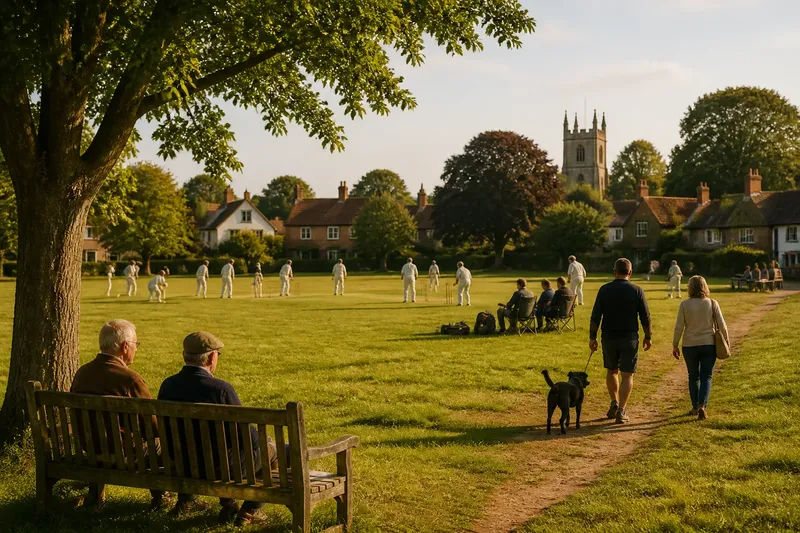
Village green shared use depends on making room for both play and ordinary routines. A Saturday cricket match might draw players and spectators, while on Tuesday the same grass is a shortcut, a place to walk a dog or a sunny spot to sit with a neighbour. The green’s shared character is not a complication to solve; it shapes how people use it.
A routine can help a club, parish group or regular visitor notice where those uses meet. Sport needs a usable surface and a clear area of play; everyday visitors need access, comfort and room to pass. The aim is not to treat the green as anyone’s private ground, but to make its different uses easier to understand.
What makes a village green shared ground?
A village green may look like a plain stretch of grass, but its uses are layered. People might cross it on the way to the shop, gather near a bench, exercise a dog, watch a match or pause to talk. The activity changes with the hour and day; the place remains familiar.
Regular players often know where equipment is kept, where spectators tend to stand and which part of the ground is marked for play. A newcomer, a family with a pushchair or someone taking a shortcut may not. Shared customs work best when people can see them in practice rather than having to guess.
Think of a village green as a station forecourt on market day: a temporary crowd can gather without making the space belong only to that crowd. Sport can take focus for a spell while paths, seating and quieter corners remain part of the place’s everyday life.
How can a week make room for both?
Start by noticing how the green is used before deciding what should happen next. This need not become a formal survey or booking system. A little attention to the points where sport and ordinary routines meet can guide modest, clear arrangements.
- Walk the green early in the week: Check entrances, paths, benches, worn patches and places where people pause. If a likely play area overlaps a well-used route, then choose another set-up or keep that route open through the activity.
- Confirm the planned session: Ask the club or organiser when play is expected to start and finish. If the timing is clear, then share it through a local noticeboard or familiar channel; if it is uncertain, then wait to post a definite notice.
- Set out equipment on the day: Keep bags, spare balls and chairs together. If they leave the usual route clear, then keep the arrangement; if they narrow a path or block a gate, then move them before play begins.
- Make crossings easy to spot: Look for places where people may need to pass near the playing area. If a clear route can be kept open, then show it plainly; if play makes that route awkward, then pause when someone crosses or adjust the playing space.
- Check the green after play: Look for balls, pegs, litter and belongings, and make sure gates, paths and seating remain usable. If anything has been left behind or access is obstructed, then clear it before leaving; otherwise, leave the area as found.
- Ask what needs adjusting: Listen for comments about a crowded entrance, a blocked seat or a difficult crossing. If a specific problem comes up, then change the next set-up to address it; if the arrangement worked for different users, then keep it simple.
Each check deals with a different moment, rather than asking one sign or rule to do all the work. It also gives people a chance to mention a small inconvenience before it becomes a settled grievance.
Where should players and visitors meet?
The edge of a playing area is often where the green’s different uses become most visible. A ball can travel beyond the marked space, a dog walker may be heading towards the far gate, and spectators may gather near the best view. The aim is not to remove every point of contact, but to make likely crossings clear.
Say a village club plans an evening practice, and a frequently used path crosses the open grass near one end. The organiser places the kit on the far side, leaves the crossing clear and asks players to pause as people pass. The expected result is easy to observe: people can cross without weaving between bags, and play can resume once the route is clear.
A simple arrangement is often easier to understand than an elaborate boundary. If a line, rope or temporary marker is appropriate, use it to show the playing space without implying that the rest of the green is closed. Clear sightlines and a friendly word can be just as useful.
How can a match welcome people who are passing?
Not everyone who arrives is there to watch the whole game. Someone may stop for a few minutes, a child may want to see what is happening, or a neighbour may simply need to cross. A welcoming match allows for these partial visits instead of treating every onlooker as part of a fixed audience.
Leave a comfortable place to watch that does not obstruct the route through the green. A short explanation of where the game is taking place can help visitors avoid standing in an awkward spot. There is no need to turn an informal match into a performance; awareness and a greeting can make it easier to approach.
Hospitality also means respecting people who are not interested in the sport. Keep equipment and conversation from spilling into a quiet seating area, and do not act as though a passer-by must move simply because play has started. Visitors make space for the game, and players leave room for the rest of the place.
What do visitors often want to know?
Can people use the green while a match is on?
Often they can, provided they stay outside the active playing space and follow clear local arrangements. Someone crossing or sitting nearby should not have to guess where the game is taking place.
Who decides when sport takes place?
That depends on the green’s local arrangements and the groups that care for it. A club, parish council or other local body may have a role, so ask the relevant people before assuming the space is available for regular use.
What should a visitor do if a ball comes their way?
Pause and let a player retrieve it rather than returning it without knowing the situation. If you are walking with a child or dog, give the active area room until the players indicate that it is clear.
Can everyday activities continue during a fixture?
That is often the aim of a shared green, though some activities may need to move briefly when play is close by. Players can help by keeping their set-up compact and communicating courteously.
What should change when the week ends?
At the end of a week, ask more than whether the match went ahead. Did the green still feel easy to enter? Could people reach the places they usually use, and was the playing area left tidy? These are practical signs that sport fitted into communal life rather than displacing it.
Say a club has scheduled a practice beside the bench people use to wait for the village bus. The organiser notices that two kit bags make the approach awkward, moves them beside the boundary, and checks that the path is clear. The resulting arrangement leaves the bench accessible while keeping the equipment close to the players; if the path still feels cramped, the organiser can shift the kit farther away next time.
A short conversation can guide the next week’s arrangements. If a neighbour mentions a blocked gate or awkward crossing, make a specific change to where equipment is placed or how the area is marked. The best routine is one people can understand without a local initiation: a friendly greeting, a plain notice and a willingness to pause play help keep village green shared use part of everyday life.